
Our gingko tree is slowly turning gold and assaulting our front drive with its smelly fruits; we have finally switched on the central heating and, everywhere I look, peeping through the leaf litter, I see not wildflowers but fungi.
So far, I have been mushrooming twice this autumn. In two of Worcestershire’s ancient woodlands. Shrawley Wood is the largest small-leafed lime woodland in the UK and is a Site of Special Scientific Interest (SSSI), while Nunnery Wood is a much smaller woodland on the outskirts of Worcester with a higher footfall. On both occasions, I was accompanied by my friend and fungi enthusiast (she rejects the word ‘expert’), Annie Hutchison. Annie’s love of mushrooms grew out of her interest in foraging for wild food. She honed her mushroom identification skills so that she could confidently distinguish between edible fungi and their inedible and potentially lethal counterparts. Nowadays, these skills add wonder to her woodland walks, regardless of whether she takes home something tasty for supper.
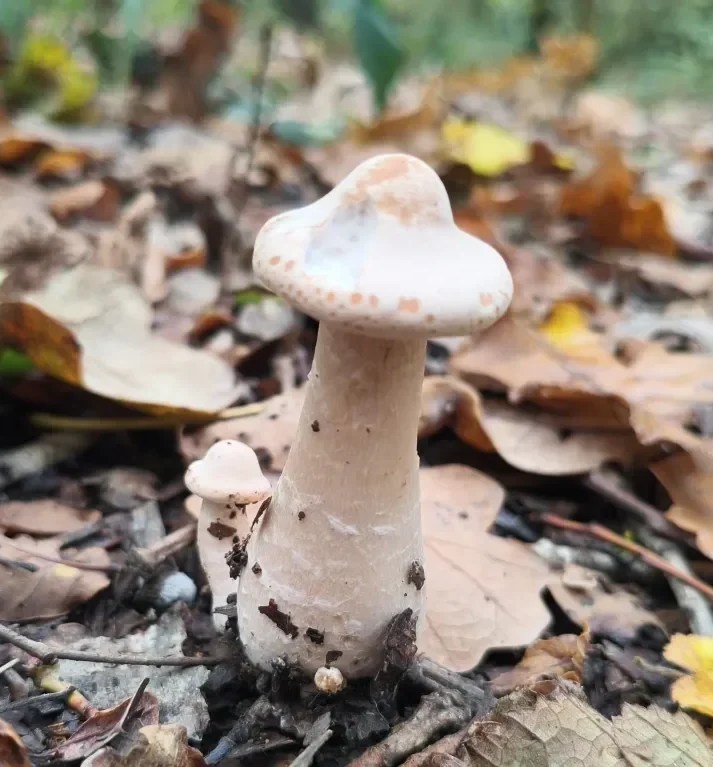
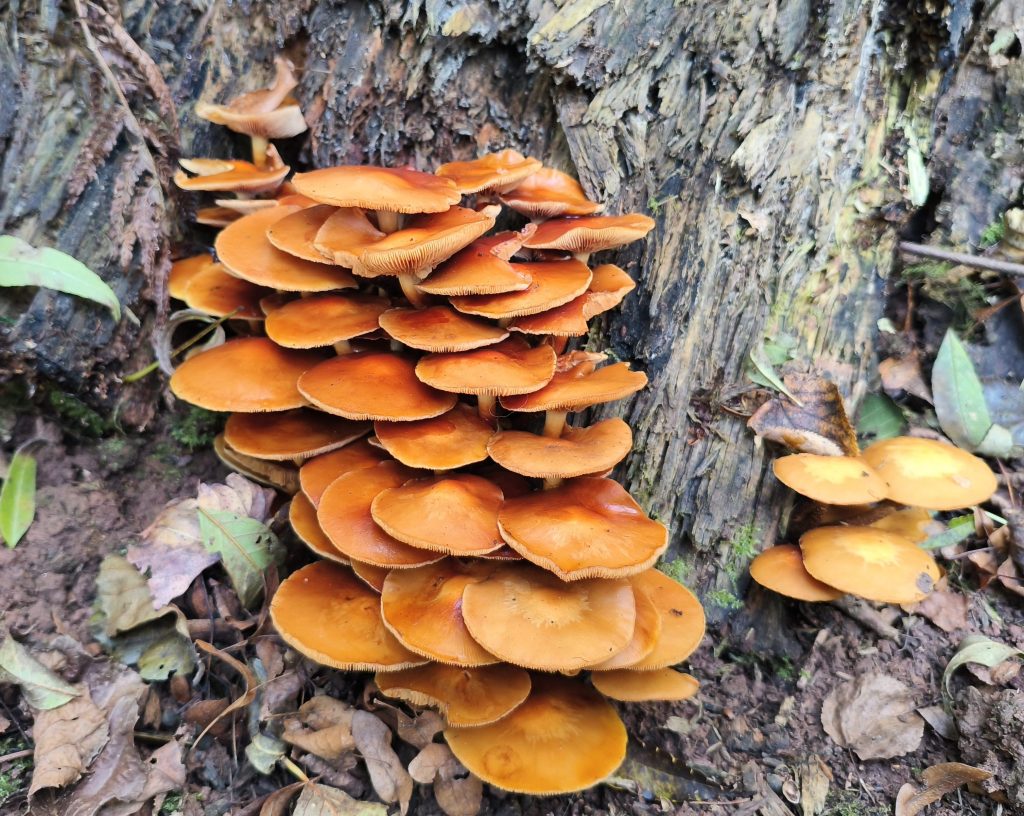
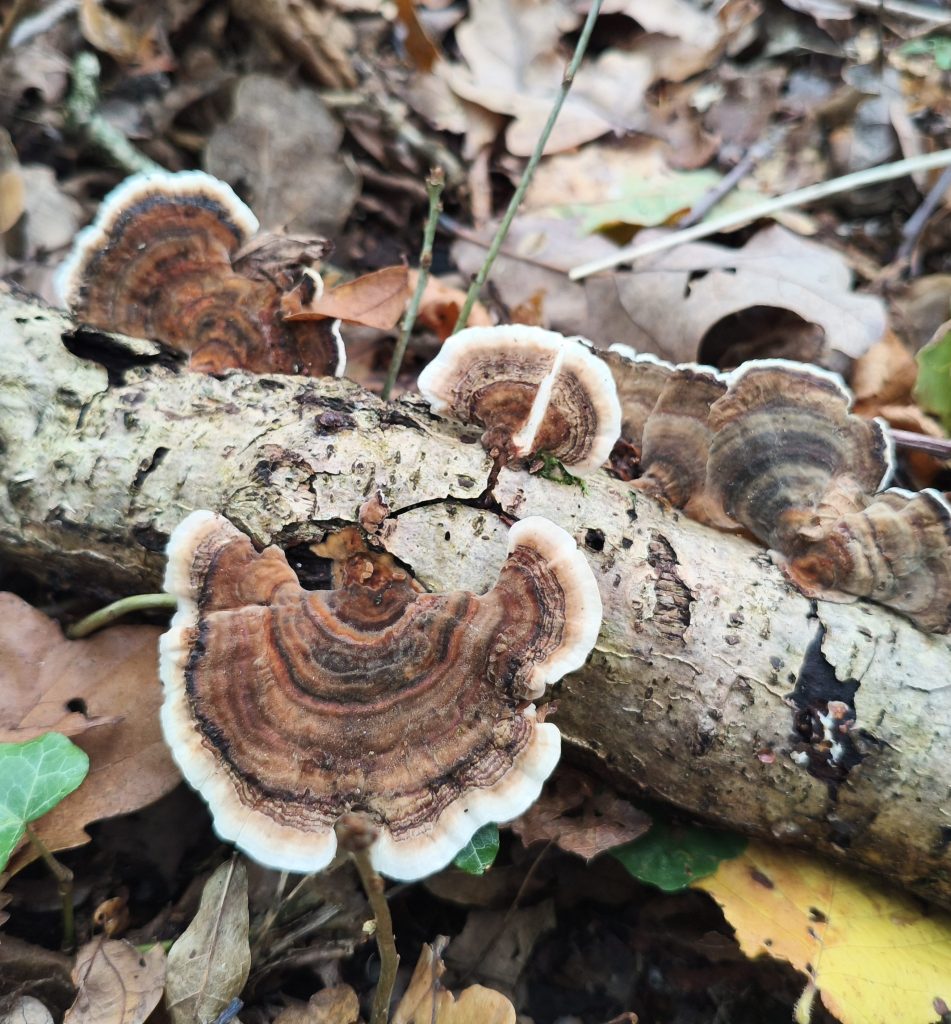
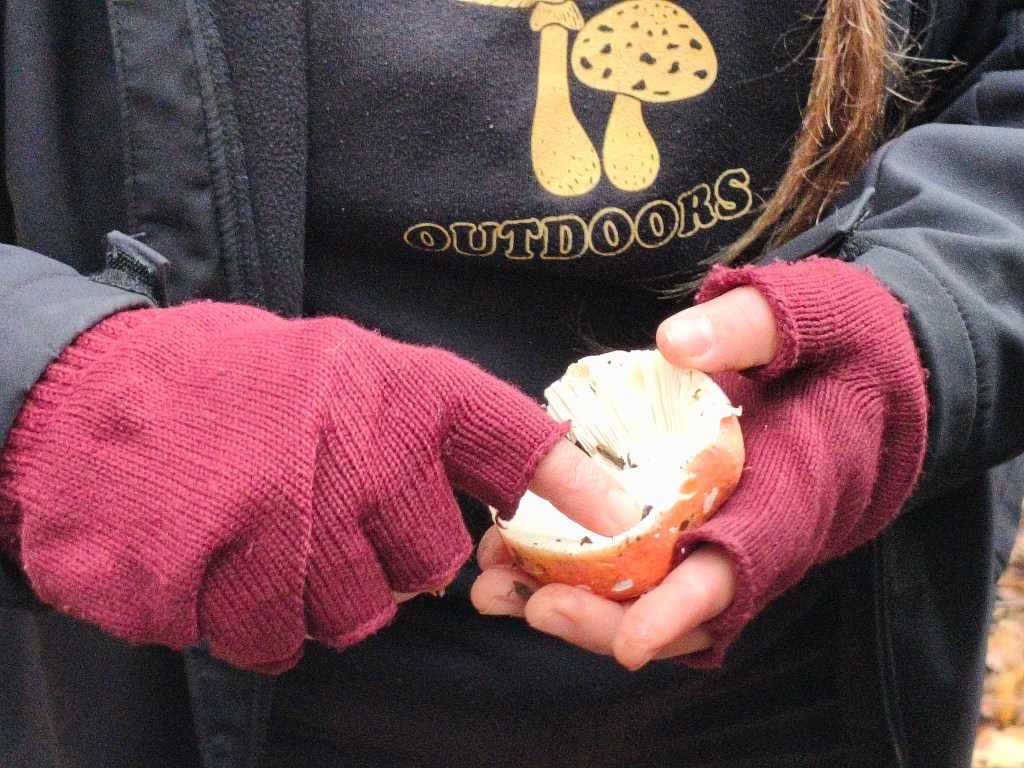
Annie is not a fan of the word ‘toadstool’, referring to it as ‘a mycophobic term’. The word ‘toadstool’ is thought to derive from the Old German words ‘tod’ and ‘stuhl’, meaning ‘seat of death’, and reflects our deep fear that all mushrooms are out to get us. But in reality, while some mushrooms are poisonous to ingest, they are all perfectly safe to handle. And in fact, according to Annie, it is essential to pick a mushroom to identify it. This is so you can take a good look at the mushroom from all angles, including its cap, gills (or pores), stem or stipe, and base, and even give it a sniff. Some mushrooms change colour or ‘blush’ when pressed, which can be another ID factor, while others have a skirt or ring clasping their stems. Others can be identified by their ‘spore print’, which is achieved by placing the mushroom over a piece of coloured paper to reveal the colour of its spores.
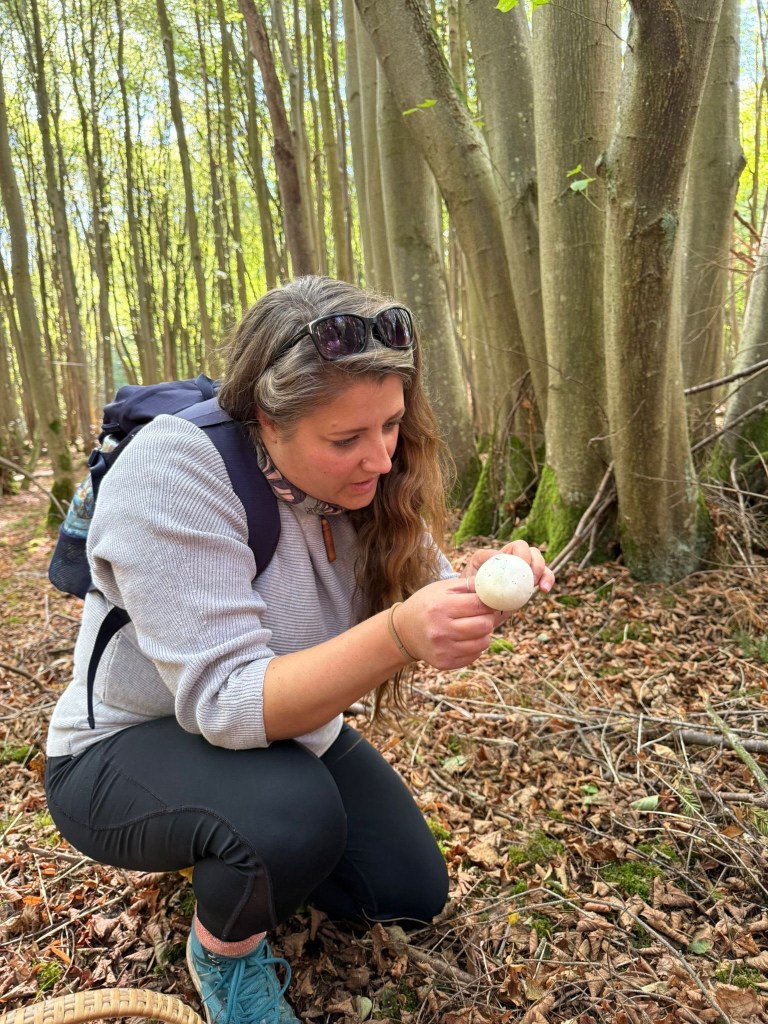
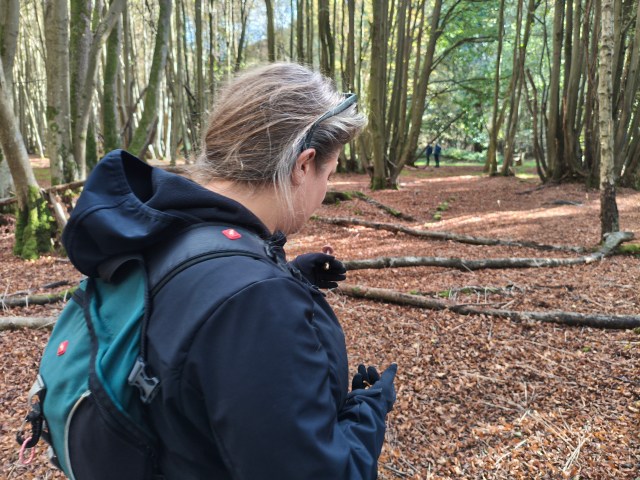
As mushrooms are the visible fruiting bodies of fungal organisms, picking them is no different from picking an apple off a tree and will not usually cause any harm, but it is a good general rule to only pick one if there are plenty of its fellows nearby and to leave solitary mushrooms alone.
Woodland fungi fit broadly into three categories: the mycorrhizal fungi, which live in symbiosis with trees and plants, exchanging nutrients between their fungal hyphae and plant roots; saprophytic fungi, which decompose dead and dying wood, without which woods would be an impenetrable mass of wood; and parasitic fungi, like honey fungus, which destroy their hosts.
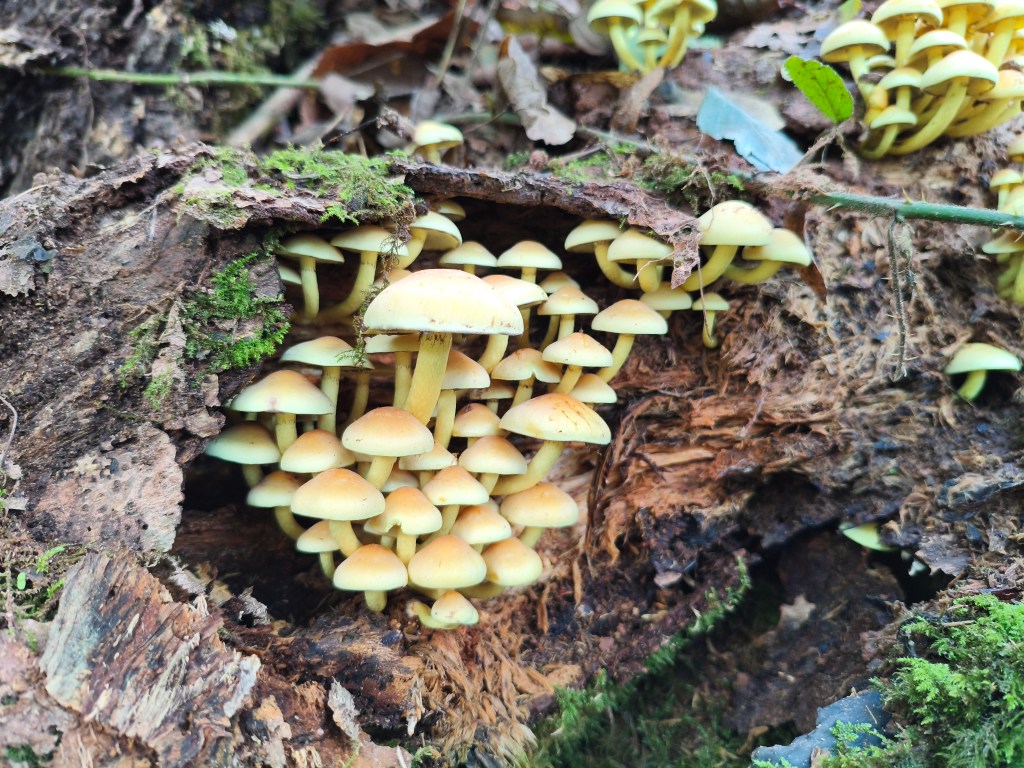
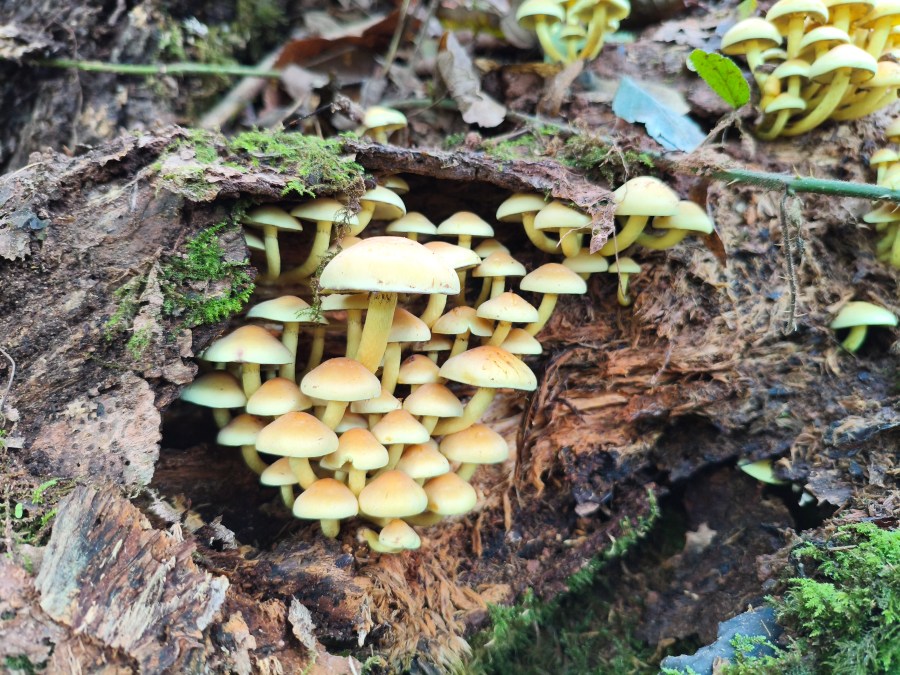
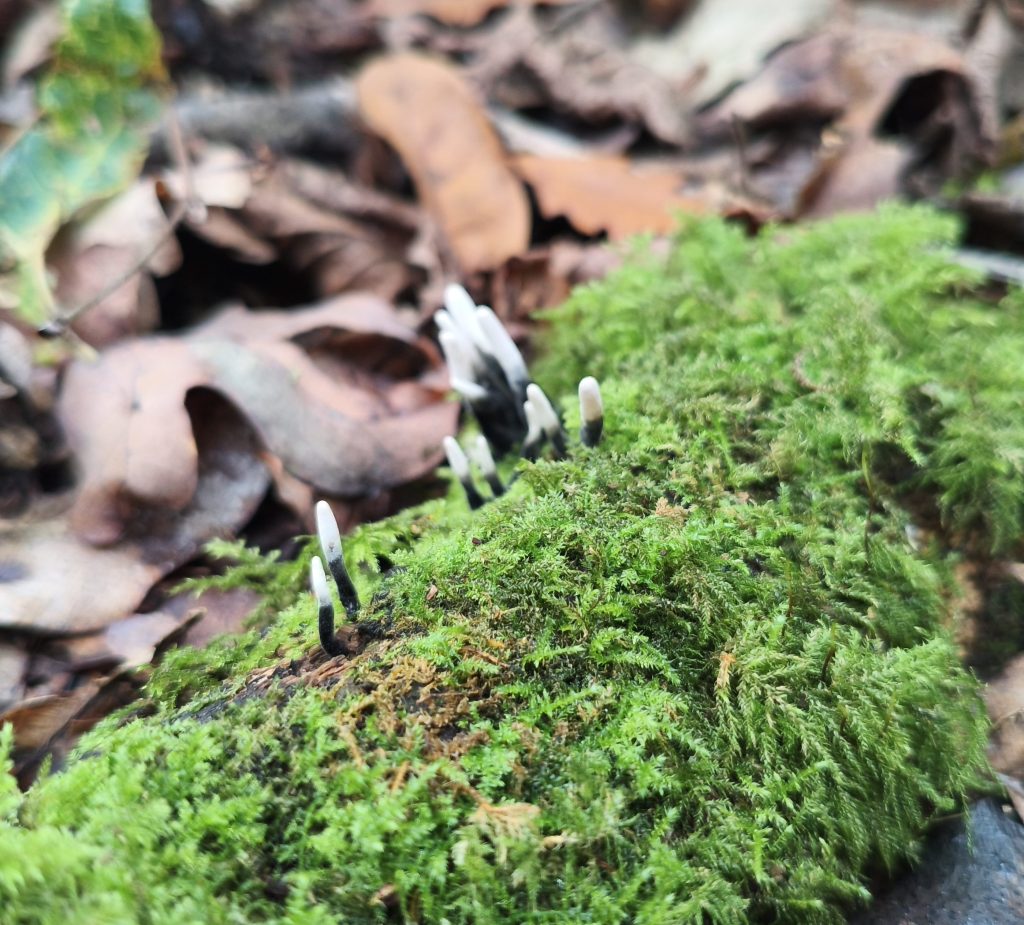
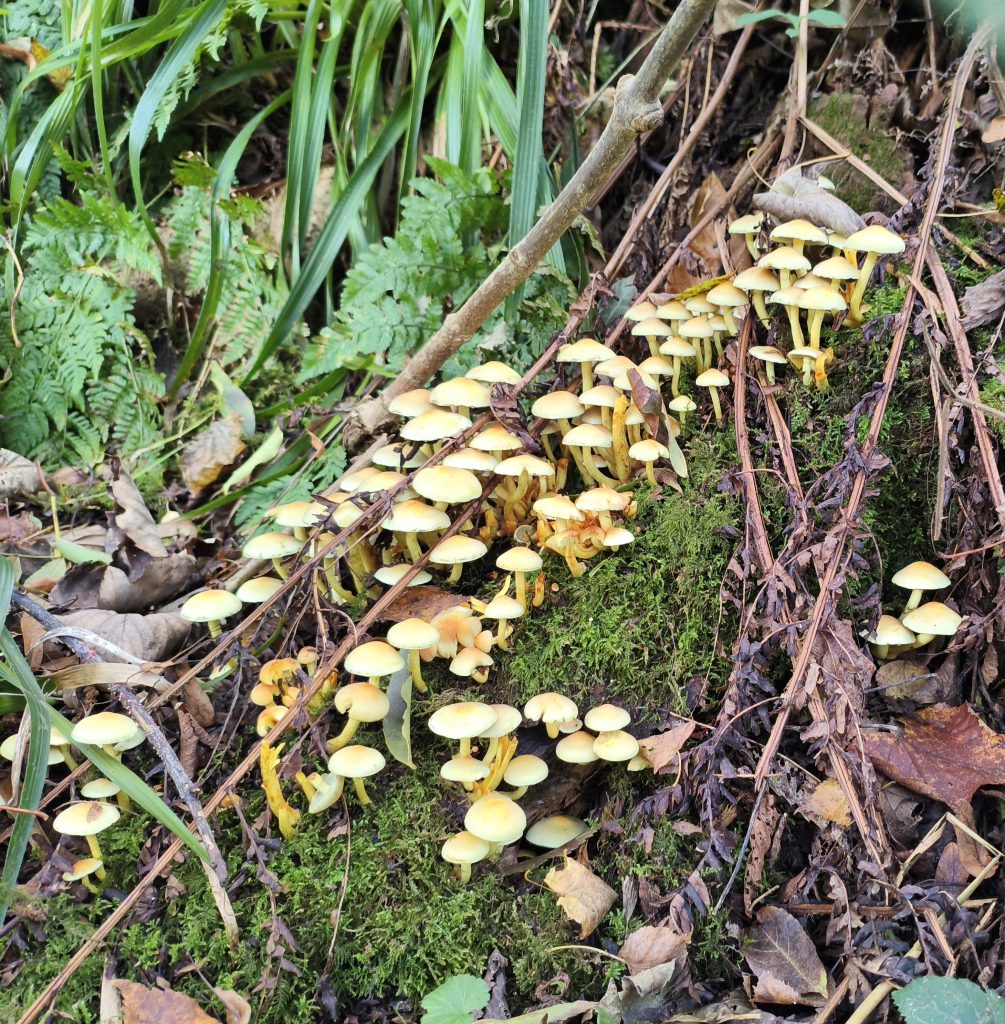
There are roughly 15,000 different species of fungi in Britain alone, and it would be impossible for anyone to know all of them, which is why Annie feels uneasy about styling herself an expert. To avoid getting daunted, she recommends starting by getting to know a handful of recognisable species, such as Sulphur Tufts, which glow luminescent yellow in dim light, or Candle-snuff or Staghorn Fungus, with its rows of pointy white-tipped black mushrooms.
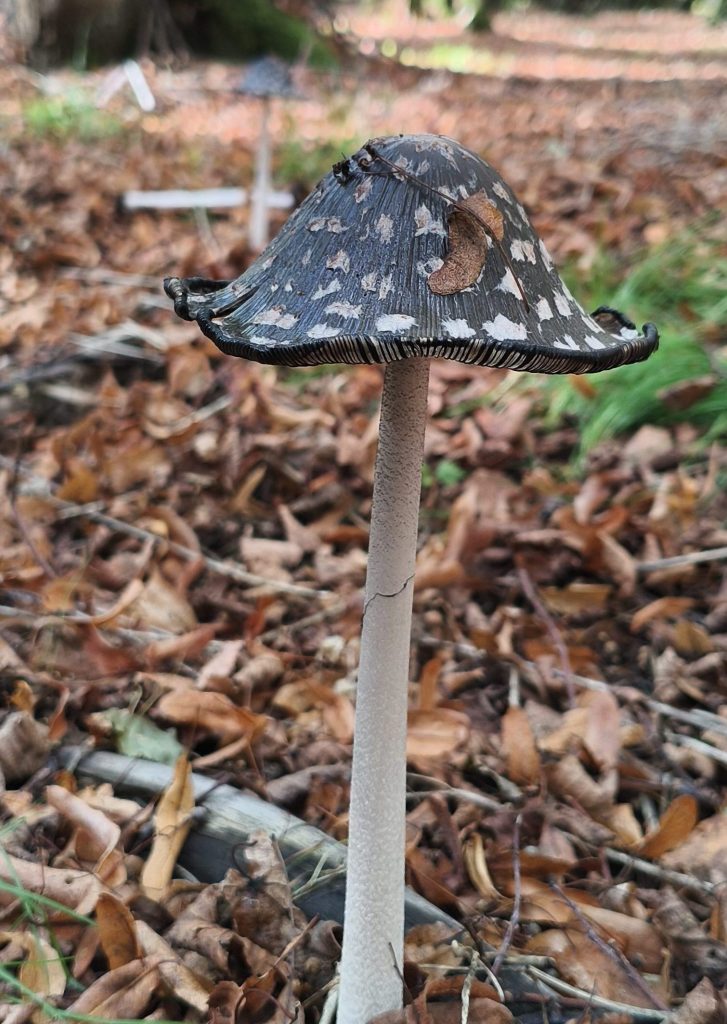
There are certain key characteristics that, with a bit of practice, you can use to narrow a mushroom down to a particular group. For example, inkcaps have a classic pronounced bell shape and dissolve into an inky mess. We found Magpie Inkcaps in both woodlands, with striking black and white scales on their caps, and a tiny city of a diminutive species of inkcap nestled in some deadwood.
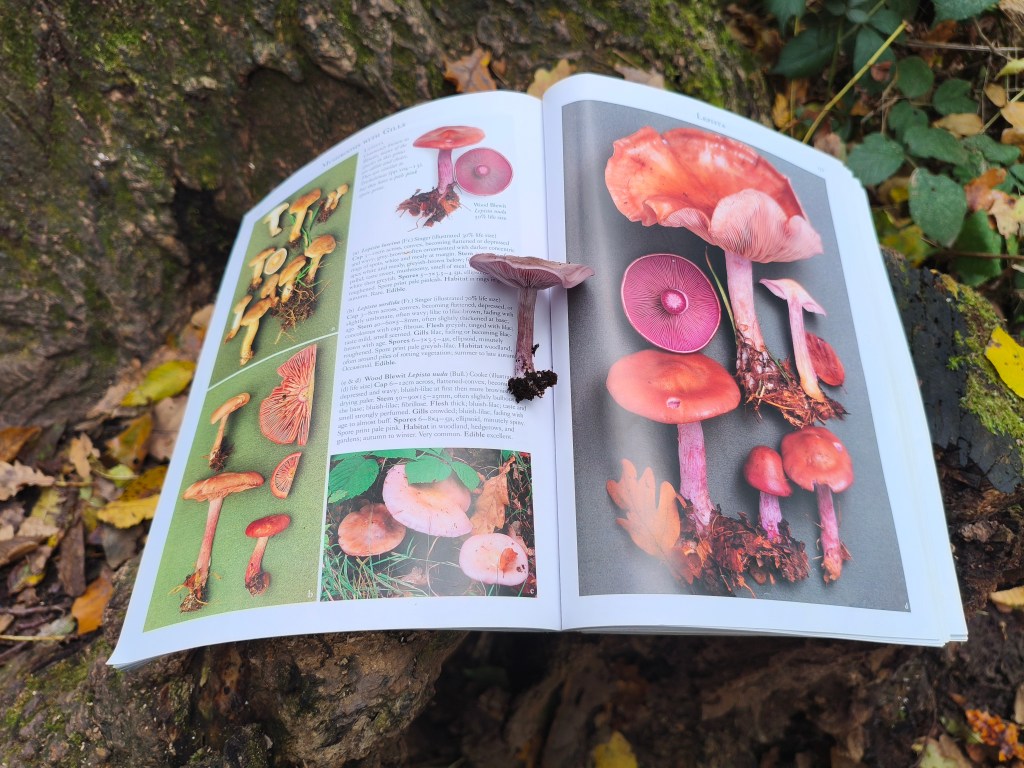
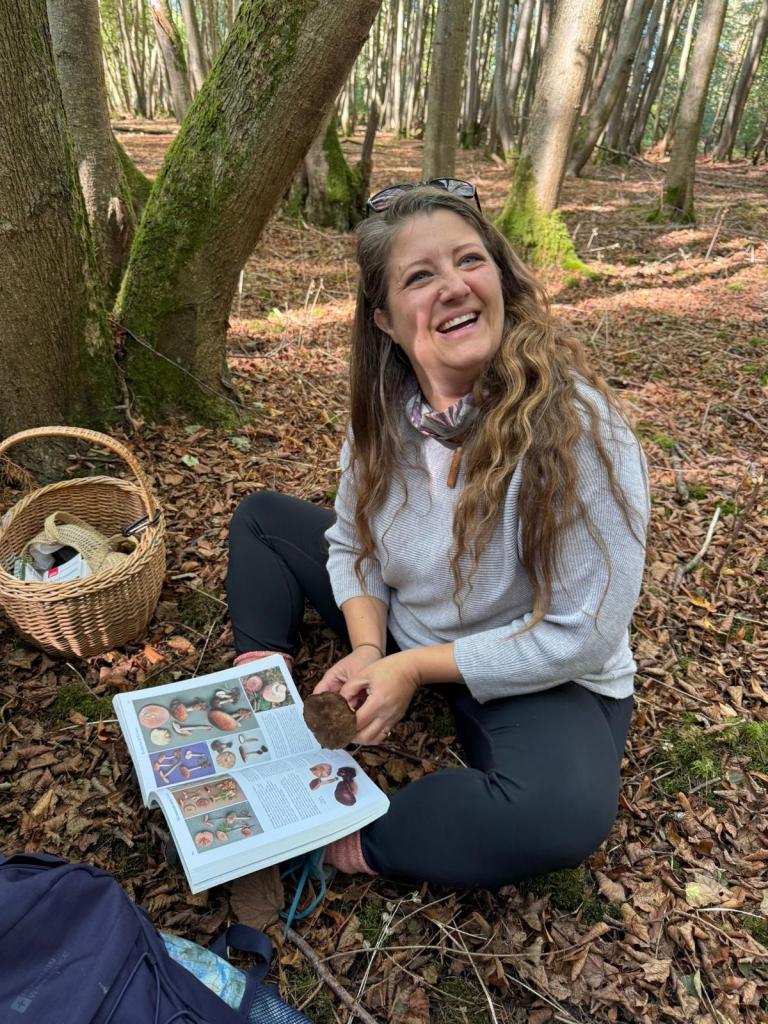
An essential item in any mushroom hunter’s toolkit is a good ID guide. Annie never goes into the wild without at least one copy of either Mushrooms by Roger Philips, The Mushroom Guide and Identifier by Peter Jordan, or Fungi by Paul Starosta and Christian Epinat. Even when she’s 99 percent certain of a mushroom’s identity, she always checks it in at least one of these guides to make absolutely sure. And even then, it is not always possible to narrow a mushroom down further than its family, as there can be so much natural variation within one species. Then there’s the fact that mushrooms change their appearance as they emerge, ripen, and decay. There is even a species of mushroom called Deceiver, so-called because it comes in a wide variety of guises.
The common names of most fungi species are relatively recent inventions. Before the 1970s, most mushrooms were only known by their scientific names in Latin, which created a barrier to ordinary folks learning to spot and identify them. Then a group of mycologists got together to agree on a host of descriptive English names, which opened the world of mushrooms to more people. This is why most mushrooms have one common name each, unlike wild plants, which may be known by several different monikers around the country.
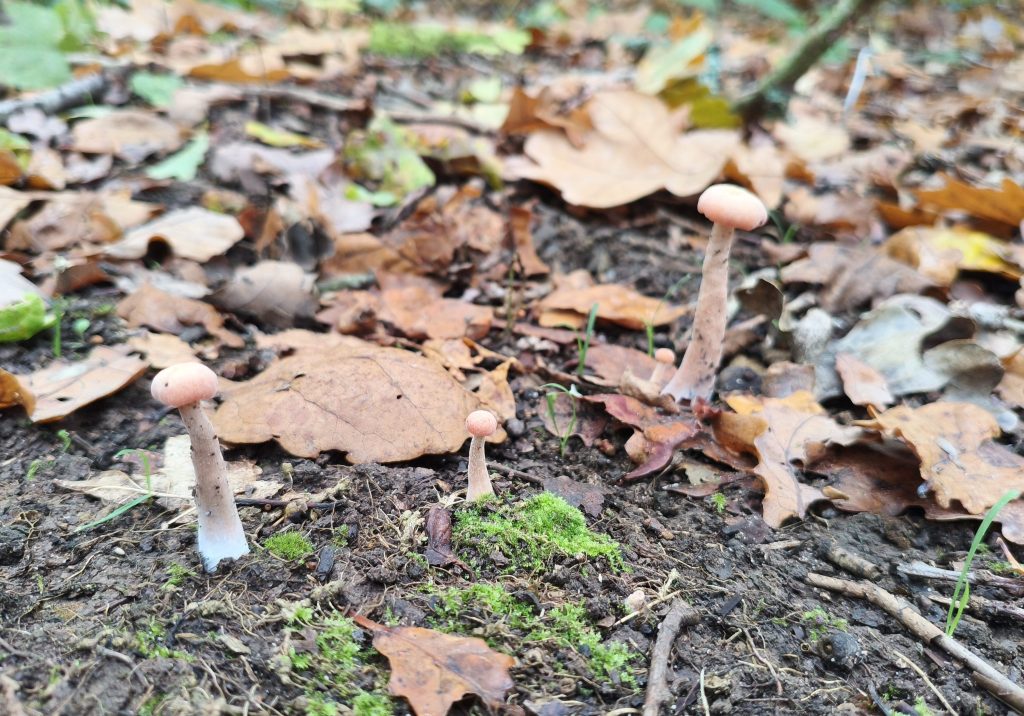
I’m not sure when my next visit to the woods will be, but it doesn’t matter; there aren’t as many fungi around this autumn as usual due to the long, dry summer, but I am still spotting them everywhere I go: roadsides, hedgerows, verges and gardens.
If you live near Worcester and are interested in learning more about fungi and foraging, then why not sign up for one of Annie’s foraging walks at Growing Wild Worcester? You’ll be amazed by what wonders you’ll find.

